The Flame of Freedom: A Final Prostration at the United Nations

Logba Rangzen’s ultimate sacrifice: Self-immolation at the United Nations Headquarters, New York

Yesterday, the world was focused on the 2026 FIFA World Cup. Millions of people watched as the legendary Ronaldo played his final game, entertaining spectators across the globe. That match became one of the most-watched events in history, with over 20 million people glued to their screens.

But at that same moment, in front of the United Nations Headquarters in New York, a Tibetan activist was quietly preparing for a different kind of final act.

He sat calmly beneath a balcony with two bags beside him. One bag was embroidered with a Tibetan flag; the other was a simple plastic bag. No one could have imagined that this calm, happy-looking man was carrying a Chupa—a traditional Tibetan dress—soaked in petrol.

Under the scorching sun, he filmed a video that would become his final will. In the video, his voice was steady and his mind was sharp. He spoke directly to his people: “Communist China is waging a campaign to destroy the Tibetan people through genocidal policies. I have little to say to Tibetans inside Tibet, who are doing everything in their power to safeguard our culture, religion, and language. I am doing this for my country. For the Tibetan nation.”

Even as he recorded his final words, he remained unshakable. It is hard to imagine the strength required to stand firm while knowing he was leaving behind his loved ones, his friends, and the homeland he held so dear—a land he hoped to see just once more in his lifetime. He ended the video with a final cry: “Victory to Tibetan Independence! Victory to Tibet!”

Before making his ultimate sacrifice, he reached out to a few of his closest friends—fellow activists who shared his deep political commitment. Tragically, some missed this final opportunity to speak with their dear friend, a hero, lost in the busyness of their daily work. However, one friend did manage to speak with him. They spoke of the tragedy of Tibet and the frustration of being ignored by a world that only pays attention to bloodshed, while ignoring the peaceful and non-violent path of the Tibetan people. Before they parted, he even asked to take one last photo together— a small keepsake to accompany his soul on its long-awaited return to his homeland.

As police sirens wailed in the distance, he calmly finished his six-minute message. He then dressed himself in his traditional Tibetan Chupa. He put it on perfectly, as if he were preparing for the Gorshey (circle dance) he loved so much. He fixed the Tibetan flag firmly to a pipe he had brought with him. He had clearly searched for the perfect spot—a place where his camera could capture both his flag and the United Nations building.

After setting his phone in the perfect position, he walked slowly to the road sign. He raised the flag, and then, he calmly lit himself on fire.

As the flames consumed his body, he stood firmly for over a minute. There were no screams of agony and no signs of pain. It was as if he had wrapped himself in a monk’s robe. Though the extreme heat of the fire was consuming his body, his mind remained clear. He made sure not to fall back, so he wouldn’t knock over the Tibetan national flag. He had planted it firmly and was careful to keep the flames away from the flag of his hope. His heart was strong but his legs eventually gave way. Still, he did not cry out or struggle. He bent his knees and extended his hands toward the ground in a final prostration.

In that position of deep prayer and respect, he laid his body down toward the United Nations building. Even as flames covered 90% of his body, he held onto a desperate hope that the United Nations—the place meant to resolve the world’s suffering—would finally look at Tibet.

As he burned, the world continued to move. Some people walked by without even noticing. Others passed at their normal speed, as if the sight were common. Cars rushed by, honking their horns, with no one stopping to help or extinguish the flames. Finally, officials arrived with fire extinguishers and put out the fire.

The world watched a game yesterday, but it missed a hero. He gave everything—his life, his future, and his very body—to be a voice for a nation that is being silenced.

Like this brave man, more than 160 Tibetans have offered their sacred lives for the cause of Tibet, protesting against Chinese repression. Too many have died in silence, their flames of freedom extinguished by state censorship and control. The regime has not only silenced the self-immolators but has also suppressed their families and entire villages through intimidation. In the past, many voices, slogans, and footages never reached the halls of power, but this time is different. Loga Rangzen, a Tibetan martyr, set himself on fire directly in front of the United Nations Headquarters.

The UN may try to turn a blind eye, looking through the thick lenses of Chinese influence, but the visuals are now everywhere for the world to see. We hope that this time, the world will finally hear the cry of a burning nation and acknowledge seventy years of suffering. What more could a man possibly do to demand truth and justice?

You Will Forever Be Remembered as a Rangzen Warrior: A Tribute to Gen Lhasang Tsering La

What a sad and tragic irony. Only yesterday evening, I was introducing Gen Lhasang La to my uncle’s daughters. As we watched his interviews and read his poetry, they were struck by his commanding presence and his steadfast warrior spirit. It feels unbelievable that he has passed so soon after. But I find comfort in the fact that they came to know him and his legacy while he was still with us, rather than just through the memorial tributes to which we have become so accustomed. May he return in a swift rebirth and through many future incarnations, carrying that same indomitable spirit.

Not long ago, I wrote a poem on Gen Lhasang Tsering la’s commitment and character. Although I had read his poetry, I hadn’t seen any of his interviews or speeches. Initially, I thought my poem captured his essence well. However, after watching a video interview where he expressed his anger through non-verbal cues, I was struck by his depth. Upon re-reading my poem, I felt it fell short of doing him justice. My words seemed inadequate to describe his dedication, courage, and unwavering commitment to the Tibetan cause.

During my time working at Tibetan Youth Congress, I had the privilege of meeting him on several occasions. One notable instance was when he visited our office, seeking someone to type out part of his handwritten book. I agreed to help, and he was grateful, even offering me his laptop as a token of appreciation. However, I declined, suggesting he give it to someone who might assist him further in the future. This was shortly after the first COVID-19 wave, and he was planning to publish the book once restrictions were lifted. Although he visited Delhi to find a publisher, he returned disappointed. Despite my reminders, I didn’t hear about the book’s progress afterward. I also had the opportunity to escort him to the hospital on several occasions.

February 13, 2022: At the well-known Juduk Kupchak. A memorable afternoon spent having sweet tea and presenting one of my poems to Gen la.”


One day, I received a call from the Tibetan settlement officer regarding Gen La’s health condition, and we immediately rushed to his house. We found him lying pale and weak on his bed, likely having gone without food for a while. Fortunately, he was still breathing; otherwise, his condition might have been mistaken for something more severe. We carefully lifted him onto a sheet and transported him to the ambulance through the steep stairs of his house.

We rushed to Delek Hospital, with the TYC Vice President accompanying him in the ambulance while I followed on my bike. Upon arrival, the nurse administered an injection—something he would normally resist with all his strength. But this time, he was too weak. His body had deteriorated; he lacked the energy to fight back against the injection or any other medical treatment. His foot had lost its natural flesh tone, appearing dry and lifeless. He could barely speak. But once he regained consciousness, he softly murmured, “I want to return.” Someone beside him asked, “Return where?” Lying on his deathbed, Gen La responded, “I want to return… return to the country I came from.” This statement gave me a goosebumps, inspired me and made me reflect on his unwavering determination to return to a free Tibet. It was a dream that consumed his every sleepless night and a thought that never left his mind—even as he walked back and forth from McLeod Ganj to TCV and from McLeod Ganj to Dharamkot. His stomach skin was dry and loose, a sign of having gone without food for days.

Taken on June 7, 2024, shortly after Gen la was hospitalized. He had become so frail and pale that he no longer had the strength to resist the injections.

He received treatment, and when I visited Delek Hospital the next day, his daughter had arrived. She was doing her best to care for him—massaging his frail body and gently feeding him spoonful of soup, though he could barely swallow.

On another day when I visited him, he had regained some strength—he was eating chopped fruits and could move his body again. At one point, he said something in Tibetan, but his daughter seemed to have missed it. She asked him to repeat it in English. Gen La grew furious, turned his back to her, and refused to speak for a while. He is a true warrior, one who longs for his daughter and all Tibetans to return to a free Tibet—not as outsiders who barely speak Tibetan or understand its unique culture and identity, but as proud Tibetans. His frustration wasn’t just with his daughter—it was with himself. Having studied in an English-medium school, he was angry at his own fluency in English while struggling with his Tibetan writing skills.

Gen La has always been vocal about the misuse of terminology when countering the CCP. Time and again, he would visit the office, meticulously pointing out technical errors in our statements or pamphlets, always arriving with his well-written pencil notes. He observe everything we do, often watching as he passed by the office. One day, while walking along Bhagsu Road below the TYC office, he noticed something that compelled him to come straight inside. He told us, “The Tibetan national flag on our pole is caught between the threads and isn’t flapping freely like the TYC flag on the other side.” Gen La had come specifically to ensure that the national flag flew as proudly as the TYC flag. His patriotism is unmatched, and his dedication has inspired many young Tibetans like myself.

Gen Lhasang la’s passion for Tibet is palpable when he speaks about our nation. He conveys his thoughts with conviction, speaking from both the mind and heart. This sincerity is a rare quality, especially among many younger generations. I’ve noticed that many Tibetan experts, despite discussing grave issues, often struggle to convey the gravity of the situation through their tone and facial expressions. They may smile or appear nonchalant, undermining the seriousness of the matters they’re addressing, such as the critical issues facing Tibet.

What strikes me about Gen Lhasang la is his ability to convey the gravity of Tibet’s situation through not only his words but also his tone, facial expressions, and body language. I’ve had the privilege of watching his interviews, and his emotions resonate deeply. He speaks his heart out, and his sincerity is inspiring and encouraging.

I admire Gen Lhasang la’s strength in expressing his outrage against the CCP’s atrocities, both verbally and through his non-verbal cues. His commitment to the Tibetan cause is a beacon of hope, and I don’t think I am the only one who aspire to emulate his conviction and passion.

Taken on 27th August 2022, during the TYC General Body Meeting open ceremony held at Imperial Heights.

Despite his wholehearted commitment to the restoration of Tibetan independence, Gen Lhasang la faced significant backlash and criticism from those who mistook his political stance for opposition to His Holiness the Dalai Lama. In reality, he never stood against His Holiness; he simply disagreed with the Middle Way Policy. When it comes to pure loyalty and trust, none of us can match Gen la’s devotion.

I am reminded of an incident from his childhood at Wynberg-Allen, an English school. One of the sisters looking after the children saw news of the tragedy in Tibet and prayed aloud, ‘May God save the Dalai Lama and his people.’ Young Gen Lhasang la became furious and told her: ‘My God, the Dalai Lama, is not inferior to your God. He does not need your God’s support; he is capable of overcoming this tragedy himself.’

That was his instinctive response. Who among us has that level of fierce reverence and respect for our leader?

26 November 2023: Sharing sweet tea with Gen la on Temple Road, McLeod Ganj.

Tibetan Singer Disappears After Singing ‘Prince of Peace’ Honoring His Holiness the great 14th Dalai Lama 

Tibetan Singer Disappears After Singing ‘Prince of Peace’ Honoring His Holiness the great 14th Dalai Lama 

My first glimpse of him was an unforgettable image shared by an activist on social media: a young Tibetan warrior with the word Tibet ‘བོད།’ inscribed on his head, an old rifle slung over his shoulder. He was captured in a moment of communal pride, held aloft by the people of his hometown during a religious ceremony at the Ngaba Kirti Monastery. This monastery has long been a center of resistance against Chinese rule.

But this was only the beginning of his defiance.  As Tibetans worldwide celebrated the 90th birthday of His Holiness the great 14th Dalai Lama in July 2025, the young singer re-sang “Prince of Peace,” a song honoring His Holiness the Dalai Lama. This was an act of profound patriotism in a land where singing such songs is a crime. He followed in the footsteps of his mentor, the patriot singer Gebey, who also faced imprisonment for his music.

The Chinese government, in its relentless campaign of cultural assimilation and “sinicization,” aims to erase the very word “Tibet” from global discourse, replacing it with the colonial term “Xizang.” Under this oppressive regime, the singer, identified as Asang, was under constant surveillance, a scrutiny that extended even to his wedding day. Two weeks after his tribute to His Holiness the great 14th Dalai Lama, he was arrested. His pregnant wife and two year old son were left in an agonizing void, with no knowledge of his whereabouts.

When video of his performance surfaced, a wave of admiration and fear washed over our exiled Tibetan community. While many praised his bravery, others, conditioned by years of Chinese oppression, urged for the video’s removal. “Sharing this puts them at risk. Many have been imprisoned by the authorities because of posts like this, so it’s better not to share it,” one commenter wrote, reflecting a narrative of fear that China perpetuates.

Nyiwoe la, who had shared the post, countered this sentiment, stating, “They were imprisoned by the Chinese authorities. The idea that Tibetans in exile are to blame for these arrests is a narrative straight from China. The singer himself posted this on social media, and the Chinese couldn’t stop him. What is the point of us stopping it now? His courage deserves to be respected and praised.”

To another who advocated for silence, the response was a stark reminder of the cost of defiance: “If they wanted to remain silent, they wouldn’t risk their lives to sing.”

 The news of his imprisonment confirmed our worst fears, sending ripples of worry through the Tibetan community for him and his young family.

His story is tragically common. Numerous Tibetan singers have been jailed for honoring His Holiness the great 14th Dalai Lama and their leaders in exile. In defiance of this censorship, Students for a Free Tibet-India organized a “Banned Music” night, where exiled singers performed the forbidden songs, ensuring their voices, and the voices of our imprisoned brethren, would not be silenced. During the banned music night I stated, “Inside Tibet, singing in praise of exiled leaders means risking immediate imprisonment. But while the Chinese authorities can lock away the singers, they can never lock away their songs. So we, in exile, sing for them—ensuring their voices break free from that iron grip.”

The undying spirit of Tibetans in Tibet continues to be a powerful counter-narrative to Chinese propaganda that claims they are happy and content. Each arrest, each act of resistance, exposes this lie and highlights China’s failure to win the hearts and minds of the Tibetan people.

The deepest desire of Tibetans in Tibet is to witness the return of His Holiness the 14th Dalai Lama to a free Tibet. This hope sustains them, even through the unimaginable torture of Chinese prisons, a hope that they will one day hear his voice and see him on the golden throne of the grand Potala Palace. It is a hope that fuels their resilience and a dream that haunts them in every sleepless night. 

Inspired by their courage, we will continue to do whatever it takes to amplify their voices and work towards the restoration of Tibet’s rightful independence. The time is now for the Chinese government to engage with His Holiness the 14th Dalai Lama and our political leaders to resume dialogue and find a peaceful, lasting resolution. This window of opportunity will not remain open forever, and China will bear the weight of the consequences should it fail to act.

Translated lyrics of the song “Prince of Peace”

“ As a youth, you were born in Amdo,

You left your footprints in Central Tibet,

And your noble deeds flourished in the Noble Land of India,

We remember you, O Prince of Peace.

We, the people blessed by the Dharma, do not treasure

Ornaments made of gold, turquoise and coral,

Nor garments sewn from tiger, leopard, fox or otter skin,

It is your heartfelt advice and teachings that we remember now.

You are the sun over our heads,

You are the parent in our hearts,

You are our loving teacher (Lama),

There is no way we could ever forget you.”

Source: Tibet Times

https://en.tibettimes.net/2025/07/19/young-tibetan-singer-asang-arrested/

By Sonsnow

Welcome back Your Holiness

The Tibetan Youth Congress Vice President @TTargyal and General Secretary @Sonsnow6 received His Holiness the 14th @DalaiLama upon his return to Dharamshala, following a successful program in South India.

https://twitter.com/TYCentrex/status/1892807611214430270

རྡ་ས་རི་བོའི་རྩེ་ལ།

གངས་ལྷ་མེ་ཏོག་བཞད་དུས།

བུང་བ་སྤྲིན་གྱི་ཚོགས་རྣམས།

དབྱར་དགུན་སྟོན་དཔྱིད་མེད་པར།

མཛེས་སྡུག་སྙིང་གི་དབུས་སུ།

ངང་གིས་འཁོར་འཁོར་གནང་གིས།

ཕ་བཟང་བུ་ནས།

Dreaming Tibet -Children’s Art Exhibition

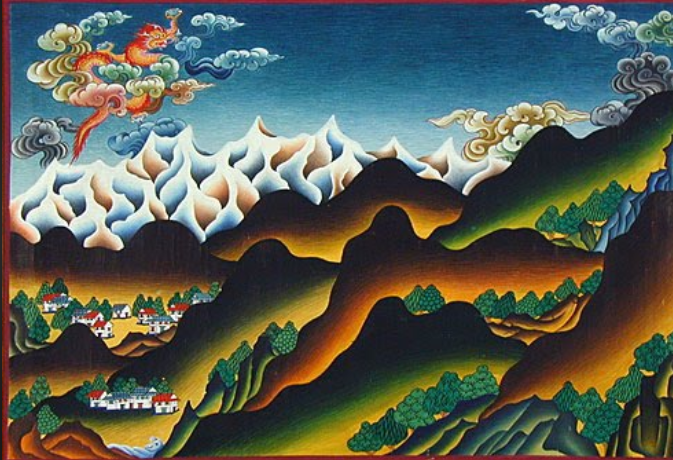
During my speaking tour in the Tibetan settlements of Northeast India, I had the chance to visit several schools. On the notice boards, I saw drawings by the children depicting their vision of “My Home.” Many of these drawings featured cement houses adorned with the Indian flag, and some showed mountains resembling those found in Indian hill stations. In contrast, our own childhood drawings depicted vast grasslands with tents, yaks, horses, and sheep, framed by towering, snowy mountains and clear, crystal rivers flowing through the valleys. It deeply concerns me to see how the vision of their homeland is gradually fading for Tibetan children growing up in exile. 

Fortunately, today I had the opportunity to attend the “Dreaming Tibet” art exhibition by KHADOK at the Kangra Art Museum. The exhibit was both encouraging and inspiring. It featured drawings by school students that not only showcased the stunning environment of Tibet but also highlighted the harsh realities faced by Tibetan children in colonial boarding schools—institutions designed to erase their cultural identity. One writing included the poignant wish, “Oh, I wish one day this art can become reality.” 

Another child wrote, “Just tasting our country’s fresh air and its smell would be enough.” These artworks uplifted my spirits and reinforced my hope that Tibetan children will one day experience and cherish the beauty of Tibet before it is irrevocably damaged by the Chinese communist regime under the guise of various projects. 

One particularly striking drawing featured a yak with a man’s leg. The accompanying note read, “If I get back to Tibet, I will buy the yak’s costume and play with it.” I hope these children understand that yaks still roam in Tibet, and that it is possible to play with real yaks if we can return soon. However, with the increasing implementation of harsh policies forcing the resettlement and relocation of nomads, a time may come when only images and costumes of yaks remain. 

It is therefore crucial and urgent to address the Sino-Tibet issue to preserve Tibet’s beauty before it is lost. Art plays a vital role in fostering a sense of nationalism and activism among young people. I sincerely appreciate KHADOK’s efforts in this project and encourage other artists, singers, musicians, actors, and creatives to contribute their talents to our cause. If all Tibetans unite and harness their skills and passions, I am confident that the light of freedom will soon shine upon Tibet.

Solo Cyclist for Tibet

I first encountered 64 year old Pa Jamyang Tenzin la during the TYC Indo-Tibet border bike rally organized by the Tibetan Youth Congress in 2020, soon after the COVID-19, Wuhan Virus outbreak. The rally aimed to expose Chinese expansionist policies and hold them accountable for the global spread of the virus. Among the 50 youth bike riders, Jamyang la stood as the oldest participant.

Later, Jamyang la embarked on his solo cycle rally campaign for Tibet. His inaugural cycle rally, “We Never Forget Tibet,” commenced from Dharamshala in Himachal Pradesh to Bodh Gaya in Bihar, covering over 3000 km through various northern states, braving diverse climate conditions. Despite dusty roads and scorching sun, he persisted in raising awareness for Tibet and successfully concluded his rally in Bodh Gaya.

On December 1st, 2023, Jamyang la initiated his second solo cycle rally, aiming to raise awareness about the Tibetan cause among Indian masses. This time, he journeyed from Bylakuppe in Karnataka, a southern state, to Dekyiling in Uttarakhand, North India, covering over 3000 km and effectively spreading awareness about Tibet to a large audience.

During his journey, he consistently kept me informed about the challenges he faced, as well as the heartening updates regarding the warm receptions organized by TYC regional chapter members and other Tibetan associations. On numerous occasions, he recounted his encounters with Indian bike riders and cyclists, whom he enlightened about the purpose of his rally. Additionally, he expressed joy at meeting social influencers, whose platforms allowed him to effectively spread his message.

On March 5th, 2024, he embarked on his third cycle rally from Dehradun to Delhi, coinciding with the 65th Tibetan National Uprising Day. This rally aimed to raise awareness about the critical situation in Kham Dege and garner support from the Indian government and the international community for the Tibetan cause. Covering more than 250 km, he distributed pamphlets and stickers along the way.

Following the completion of his third cycle rally, Jamyang la visited me to share plans for his upcoming rallies, which left me deeply encouraged and inspired by his unwavering dedication to the Tibetan cause. Despite facing numerous challenges, he remains determined to raise awareness about Tibet’s plight and its significance to the Indian masses.

As he expresses his commitment to empowering and encourage younger Tibetans through his efforts, his eyes betray a profound sense of emotion, which deeply moves me. I hope his aspirations are realized, and he finds dedicated youth to accompany him on his future cycle rallies. While my full-time office commitments prevent me from joining him in campaigns, I assist him in preparing necessary pamphlets and documents to the best of my ability. I pray that he continues to uphold his spirit and passes it on to future generations.

By Sonsnow

Dedicated Tibetans Making a Difference

October 12, 2023

Jamyang Tenzin, a dedicated Tibetan resident from Dehradun, Uttarakhand, India, has initiated a remarkable Cycle Rally campaign under the banner “We Never Forget Tibet.” Commencing on October 12, 2023, the campaign encompasses a challenging journey covering approximately 2000km, with its conclusion in Bodh Gaya, Bihar, located in the north-eastern region of India.

The “We Never Forget Tibet” Cycle Rally Campaign is underpinned by four fundamental objectives:

1.        The campaign’s primary mission is to create widespread awareness about Tibetan issues and educate people regarding the significance of the Tibetan cause.

2.        Within the Tibetan community, the campaign serves as a poignant reminder of the pressing need and the utmost urgency of the Tibetan freedom struggle.

3.        The campaign aspires to gather good wishes, providing a robust foundation for the successful execution of various activities initiated by the Central Tibetan Administration and the Tibetan Parliament-in-exile in the upcoming year.

4.        This cycle rally campaign is envisioned to be an inspiration for Tibetan youth, encouraging them to become proactive advocates for Tibetan freedom. The hope is that this rally will kindle the spirit of young Tibetans, inspiring them to engage in more freedom-related campaigns in the future.

Jamyang Tenzin, an enthusiastic advocate for the Tibetan cause, has committed himself to promote awareness about the Sino-Tibet conflict and garner support for the just cause of Tibet. Notably, he participated in the TYC Indo-Tibet Border bike rally in 2020, where he made a significant impact as one of the oldest participants.

In addition to Jamyang Tenzin’s remarkable journey, there are numerous other Tibetan individuals who voluntarily dedicate themselves to the cause of Tibet. One such exemplary figure is Tenzin Tsundue la, who has been tirelessly and single-handedly contributing to the promotion of awareness about Tibet among the Indian masses and foreigners. His decades-long advocacy work continues day and night in the pursuit of Tibet’s freedom.His activism and poetry serve as a profound inspiration fueling my dedication to the Tibetan cause.

Another notable activist and advocate of the Tibetan cause is Sangye Kyab la, a schoolmate of mine. For years, Sangye Kyab has been staging protests in front of the Chinese Consulate every Wednesday and has undertaken extensive cycling and walking journeys across Canada. His commitment involves promoting awareness about the atrocities committed by the Chinese Communist Party in Tibet, and his resolute act of replacing a Chinese flag with a Tibetan flag atop a high flagpole remains an inspiring gesture. Pema Kunga la, a member of Regional Tibetan Youth Congress Toronto, and his friends are running a marathon campaign to seek support for the Tibetan cause.

Further afield, in Australia, activist Tenpa Dhargyal la abstains from celebrating Tibetan New Year each year. Instead, he mourns the loss of Tibetan martyrs and reminds all of the greater cause of Tibetan freedom. Additionally, Jordhen and Ven Bakdo, former political prisoners, regularly engage in protests in front of the Chinese Embassy in Australia.

Mr. Thupten Choenyi la is another dedicated advocate, actively participating in protests in front of Independence Hall in Philadelphia. Through a year-long protest campaign, he has displayed exceptional courage and determination despite challenges posed by individual Chinese citizens and adverse climate conditions.

Tenzin Dhondup la has embarked on a remarkable journey, walking from Dharamshala to Nathula on the Indo-Tibet border in the Northeast Region of India. His mission is to promote awareness about the critical situation inside Tibet.

These are just a few examples of the many Tibetan individuals who are making tireless efforts to advocate for the voiceless Tibetans inside Tibet. I believe that if every Tibetan takes on the responsibility of fighting for the cause of Tibet, drawing inspiration from the words of Tibetan martyrs, there is hope to keep the question of Tibet’s independence and just cause alive.

Now more than ever, the contributions of every Tibetan are crucial to promoting awareness about the critical situation inside Tibet and garnering the support of the international community for the restoration of Tibet’s freedom.

By Sonsnow

Condemn the countries for voting in favour of China in the UN Human Rights Council:

The recent re-election of China to the United Nations Human Rights Council (UNHRC) for a sixth term has sparked widespread international disapproval and criticism. This re-election, despite China’s well-documented human rights violations in Tibet and other colonized countries, raises significant concerns about the credibility and effectiveness of the UNHRC.

China’s record on human rights, particularly in Tibet, has long been a subject of international scrutiny and concern. Reports of repression, cultural erasure, and the denial of basic freedoms have drawn criticism from human rights organizations, governments, and activists worldwide. Despite this, China has consistently secured its seat on the UNHRC, leading to questions about the integrity and impartiality of the council.

The international community, human rights organizations, and Tibet advocacy groups have vehemently criticized China’s re-election. It is seen as a blatant contradiction for a country with a history of human rights abuses to hold a seat on a council tasked with promoting and protecting human rights.

Advocacy groups and concerned nations are calling for greater accountability within the UNHRC. They argue that a reformed election process should consider a country’s human rights record before granting it membership on the council.

The election results reveal that 154 countries voted in favour of China’s re-election. This widespread support for a nation with a tarnished human rights record is alarming and has led to accusations that many countries are turning a blind eye to the atrocities committed by the Chinese Communist Party

For Tibetans, this re-election intensifies our struggle to draw attention to the ongoing human rights violations in Tibet. It underscores the need for more effective international mechanisms to address these issues.

There is a growing demand for a comprehensive review of the UNHRC’s membership criteria and election process. The focus should be on ensuring that countries with credible human rights records are the ones entrusted with safeguarding global human rights standards.

Tibet advocacy groups and human rights organizations will continue our efforts to raise awareness about the situation in Tibet and other colonized countries. Public pressure, awareness campaigns, and advocacy will remain critical in pushing for change.

Collaboration between governments, organizations, and individuals committed to human rights remains essential. It is through collective efforts that the international community can push for change within the UNHRC and hold China accountable for its actions in Tibet and other countries. 

China’s re-election to the UNHRC has sparked outrage and calls for reform. It highlights the need for a more rigorous assessment of a country’s human rights record as a criterion for council membership. Despite this setback, we remains dedicated to advocating for human rights and justice, particularly for Tibet and other countries experiencing oppression under the Chinese government. The struggle continues, and international solidarity is a key element in the pursuit of change and accountability.

By Sonsnow (Wrote with Al writing assistant)

Prostration for the World Peace

Ven. Kalsang Tenzin, a dedicated monk hailing from Amdo, embarked on an extraordinary pilgrimage in 2008. His journey took him from his homeland to India via Nepal, with the noble intention of promoting world peace. Motivated by the rich Tibetan tradition of prostrate pilgrimage, Ven. Kalsang Tenzin embraced the arduous path as a means of deepening his devotion and spiritual growth.

Offering Khata to Ven Kalsang Tenzin la by myself

The Tibetan people hold profound reverence for their leader, His Holiness the Dalai Lama. Many Tibetans from the Kham and Amdo regions undertake pilgrimages to Lhasa, yearning for a glimpse of His Holiness Dalai Lama’s seat in the magnificent Potala Palace and to pay homage to the sacred sites in the area. Additionally, groups of Tibetans embark on pilgrimages to sacred places like Mount Kailash, forming strong bonds with one another under the name of “Choedruk.”

Ven Kalsang Tenzin, somewhere in Tibet

Reflecting on my own childhood, I recall a time when my parents embarked on a pilgrimage to Mount Kailash, leaving me in the care of my grandmother and other relatives. In their absence, I diligently tended to the family’s yaks and sheep, hoping that the merit gained from my parents’ sacred journey would also extend to me. As fate would have it, my hopes came to fruition, and now I find myself able to visit the holy sites in India and receive the blessings of His Holiness the 14th Dalai Lama. In gratitude, I fervently wish for my prayers and blessings to reach my parents in return.

Image Source, VOA

After an arduous nine-month journey from Bodhgaya to Dharamshala by covering more than 2000 km, Ven Kalsang Tenzin finally arrived at his destination—the Dalai Lama’s temple in McLeod Ganj, Dharamshala. Overwhelmed with emotions, he prostrated himself three times at the residence gate of His Holiness 14th Dalai Lama. Then he proceeded to the main temple, where he offered heartfelt prayers for the well-being of all sentient beings and the attainment of global peace. The fulfillment of his long-awaited dream brought tears of joy, gratitude, and deep spiritual fulfillment to his eyes.

Image Source, RFA

Kalsang Tenzin’s extraordinary journey and his arrival at the Dalai Lama’s temple symbolize his unwavering devotion to the spiritual path he has chosen. Through his pilgrimage, he manifests his commitment to promoting peace in the world. His prayers, accompanied by tears born from both joy and compassion, reverberate with a heartfelt hope that peace will prevail on Earth, benefiting all sentient beings.

Somewhere in Tibet

Tibet Matters March


The Tibetan Youth Congress organized a month-long “Tibet Matters March”, which has commenced on Tibetan Martyr’s Day on the 29th of April 2023. A month-long march was kicked off from the state of Sikkim crossing West Bengal, and conclude at Tezpur in Assam. TYC volunteers participating from across the Tibetan Youth Congress Regional Chapters in India and Nepal.

Flag-off ceremony of the Tibetan Youth Congress’s “Tibet Matters March” in presence of forest Minister of the state, Sikkim.

The following particular date and place are outlined to send a clear and concrete message to the G20 leaders that China’s “diplomatic assurances” are not to be trusted.

On 23rd May 1951, Tibetan delegates were forced to sign a “Seventeen-Point Agreement” with unacceptable intimidation, and large-scale military retaliation. The Tibetan delegates were also given the only choice of either signing the “Agreement” on their authority or accepting responsibility for an immediate armed indulgence in Lhasa, the capital city of Tibet.

For the next eight years, Tibetans tried to abide by the terms of this document but China, on the other hand, showed no inclination to honour its own part of the “Agreement”, and PLA immediately set out to inflict unbelievable atrocities upon the Tibetan people and occupied Tibet in 1959. H.H. the 14th Dalai Lama was forced to flee Tibet and the Tibetan government (Kashag) repudiated the so-called “17th Point Agreement” in the Yugyal Lhuntse District of Tibet on 26th March 1959, and again on his arrival in Tezpur in Assam (India), H.H. the 14th Dalai Lama internationally repudiated the “17-point Agreement as having been “thrust upon Tibetan government and people by the threat of arms.”

“Tibet Matters March” aims to urge the G20 leaders to raise the issue of the Sino-Tibet conflict which plays a significant role in resolving the growing tension between China and a number of countries in Southeast Asia.

The very survival of almost 2 billion people depends on the freshwater resources originating from the Tibetan plateau. The continued exploitation of the Tibetan landscape, ecosystem, and natural resources by the Chinese Communist regime will produce a direct impact and long-lasting negative consequences for the downstream countries. Therefore, it’s high time to talk about Tibet which significantly matters in promising and promoting permanent peace and security in Asia. 

After more than six decades of forceful and illegal occupation of Tibet, China has turned Tibet into the world’s least-free country, sharing the bottom spot with South Sudan and Syria in Freedom House’s global freedom scores. The current human rights situation in Tibet has been one of the worst in recent years with the forceful imposition of repressive policies that primarily aims to eliminate the very Identity of Tibetans.

Under the Chinese colonial education system, over one million Tibetan children have been separated from their families and forcefully placed into Chinese state-run colonial boarding schools. It is a genocidal policy to indoctrinate Tibetan children from their cultural roots: the Tibetan language, Tibetan religion, and cultural heritage.

And under the Chinese massive surveillance system, they have been taking their hands-on mass collection of Tibetan DNA samples including children as young as five. We believe this is their newest attack on Tibetan identity, massive surveillance on individual privacies, and freedom of movement inside Tibet. Therefore, Today, Tibetan Youth Congress urges the international community and the G20 leaders, in particular, to raise the Tibet issue with the Chinese leaders.


Demands:

1) We urge the Prime Minister of India Shri Narendra Modi Ji, and world leaders to raise the issue of the Sino-Tibet conflict with Chinese President Xi Jinping during the G20 summit in September 2023.

2) We demand the Chinese government addresses the ever-deteriorating human rights situation under its repressive rule in Tibet and immediately shut down the colonial boarding schools that attack and eliminate the Tibetan culture and identity.

3) We also seek the support of international community in resolving the Sino-Tibet conflict.

Currently the Tibetan Youth Congress volunteers have reached in Alipurduar in West Bengal and entering in the Assam state in two days.

Despite the difficulties of the heat-waves hitting more than 35’C, the volunteers continue to walk under the scorching sun to amplify their voices.